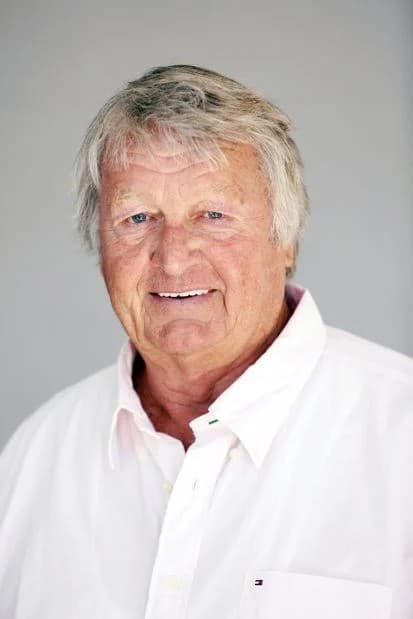
Allen Newell
An early AI researcher who used computer programs to study problem-solving and the structure of human cognition.
Biography
Allen Newell was an American researcher whose work joined computer science with the study of human thinking. He earned a physics degree at Stanford University and later completed a doctorate at Carnegie Institute of Technology, now part of Carnegie Mellon University. His early career at RAND involved research on decision-making and information processing.
Newell worked with Herbert Simon and programmer J. C. Shaw on the Logic Theorist, an early program that proved mathematical propositions. They also developed the General Problem Solver, exploring how search and means-ends analysis could organize a solution process. These systems made reasoning an experimental subject that researchers could investigate through working software.
At Carnegie Mellon, Newell continued developing models intended to account for broader aspects of cognition. His later work with collaborators on the Soar architecture examined how a general system could coordinate problem-solving and learning. His book Unified Theories of Cognition expressed the ambition to connect separate findings within a more comprehensive account of the mind.
Newell and Simon shared the 1975 ACM A. M. Turing Award. Newell died in 1992, leaving an influential body of work on symbolic processing and cognitive architectures. His contribution was not simply an early demonstration of AI, but a sustained effort to use computational mechanisms as precise, testable explanations of intelligent behavior.
Notable contributions
Co-developed the Logic Theorist
Collaborated with Herbert Simon and J. C. Shaw on an early program for proving mathematical propositions.
Helped develop Soar
Contributed to a cognitive architecture designed to integrate problem-solving and learning.
Shared the ACM Turing Award
Received the award with Herbert Simon for contributions to AI and human cognition.