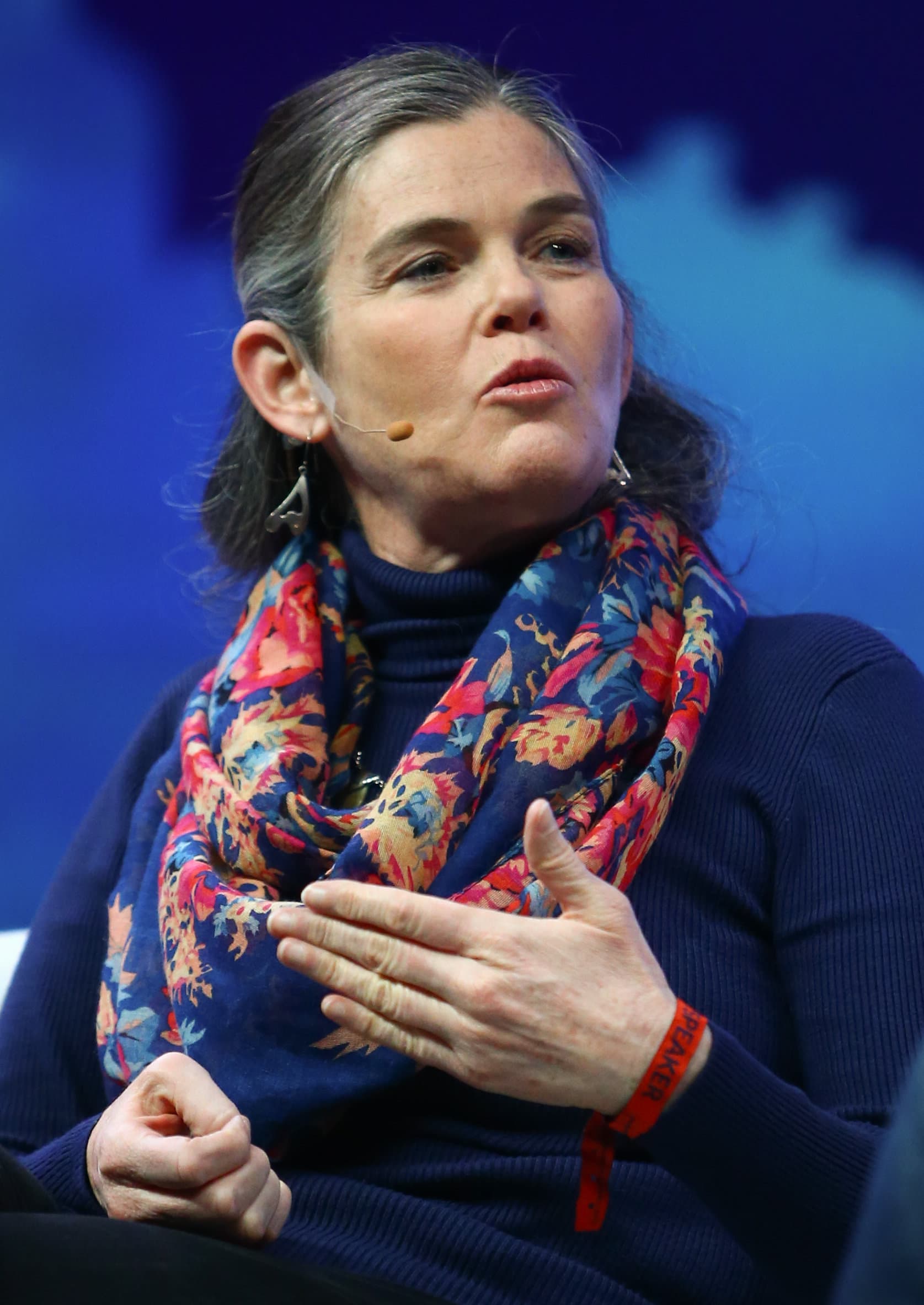
Daphne Koller
Founder and CEO, insitro
A probabilistic machine-learning researcher applying AI to drug discovery after helping expand access to university education through Coursera.
Biography
Daphne Koller is a computer scientist and entrepreneur whose work combines probabilistic reasoning, machine learning, and applications in biology. She studied at the Hebrew University of Jerusalem and earned her doctorate at Stanford University. She later joined Stanford’s faculty, where her research examined ways to represent uncertainty and learn from complex, structured information.
Koller’s academic work helped develop probabilistic graphical models and their use in machine learning. These methods express relationships among variables and support reasoning when information is incomplete or uncertain. She received a MacArthur Fellowship in 2004, recognizing the scientific promise and influence of her research across computing and related fields.
In 2012, Koller co-founded Coursera with Andrew Ng. The company brought courses from universities and other institutions to online learners, connecting her academic background with the development of an education platform. Her role included leadership during its early growth, when online access to university-level instruction was expanding rapidly.
Koller founded insitro in 2018 and serves as its CEO. The company combines machine learning with experimental biology to investigate disease and support drug discovery. This work moves her interest in complex data into a setting where computational predictions must connect with biological evidence. Across research, education, and biotechnology, her career centers on building tools that help people learn from large and difficult bodies of information.
Notable contributions
Advanced probabilistic machine learning
Developed methods for representing uncertainty and relationships in complex data, contributing to probabilistic graphical models and their applications in biology.
Co-founded Coursera
Co-founded Coursera with Andrew Ng in 2012, creating an online platform that expanded access to university courses, including machine learning.
Founded insitro
Founded insitro in 2018 to combine machine learning and experimental biology in drug discovery, using biological datasets to guide research decisions.