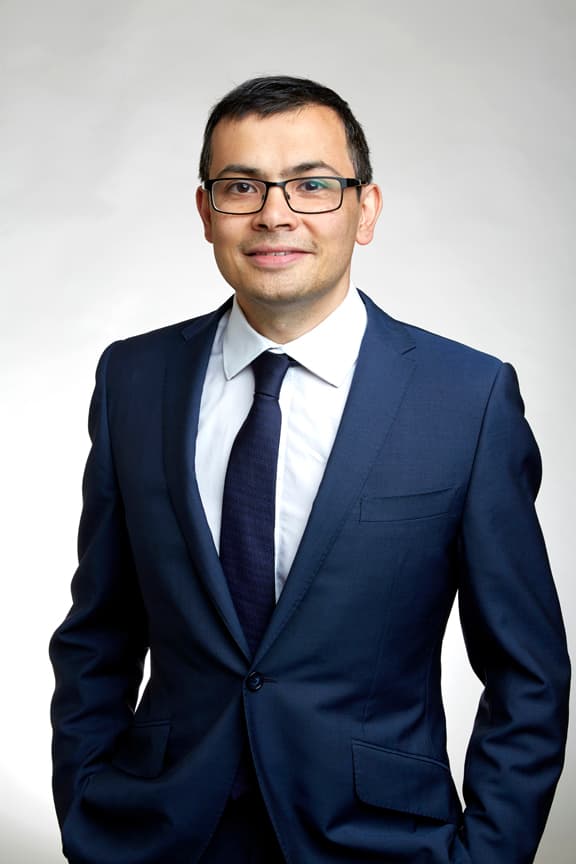
Demis Hassabis
Co-founder and CEO of Google DeepMind
The Google DeepMind leader connects learning systems with scientific discovery, from game-playing agents to protein-structure prediction.
Biography
Demis Hassabis has pursued artificial intelligence through a combination of computer science, game development, and neuroscience. An accomplished chess player as a child, he worked in the games industry before and after studying computer science at the University of Cambridge. He later earned a doctorate in cognitive neuroscience at University College London, investigating aspects of memory and imagination.
In 2010, he co-founded DeepMind with Shane Legg and Mustafa Suleyman. The organization sought to develop learning systems capable of handling complex tasks rather than relying only on narrowly specified rules. Google acquired DeepMind in 2014, giving the research effort access to a much larger technology organization while it continued developing its own research identity.
Under his leadership, DeepMind produced AlphaGo, which defeated Lee Sedol in a landmark 2016 match, and contributed major advances in protein-structure prediction through AlphaFold. These projects demonstrated different uses of learning algorithms: making decisions in a difficult game and tackling a longstanding scientific problem. Both were the work of multidisciplinary teams.
Hassabis became CEO of Google DeepMind following the 2023 combination of DeepMind and Google Brain. In 2024, he shared the Nobel Prize in Chemistry with John Jumper and David Baker, with Hassabis and Jumper recognized for protein-structure prediction. His career illustrates the use of AI research as a route toward scientific tools, alongside broader work on general-purpose intelligence.
Notable contributions
Co-founded DeepMind
Founded DeepMind in 2010 with Shane Legg and Mustafa Suleyman. The company developed learning systems for games and later expanded into scientific applications.
Led the organization behind AlphaGo
Led DeepMind during the development of AlphaGo, which combined learned neural networks and search to compete at the highest level of Go.
Shared the 2024 Nobel Prize in Chemistry
Recognized with John Jumper for protein structure prediction through AlphaFold. The prize also recognized David Baker separately for computational protein design.