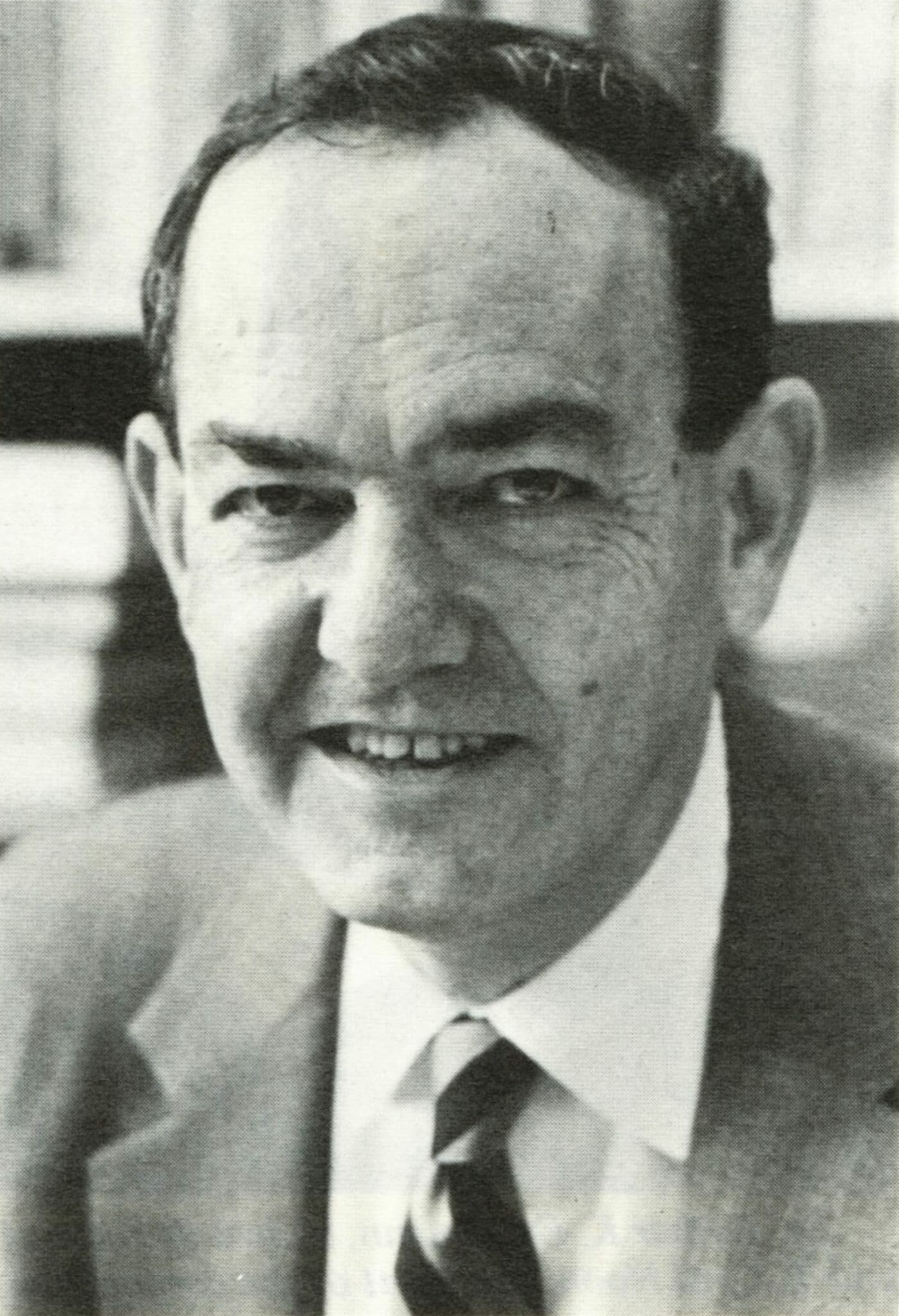
Herbert Simon
A scholar of decision-making who connected bounded rationality, human problem-solving, and the earliest symbolic AI systems.
Biography
Herbert Simon was an American scholar whose research crossed economics, psychology, public administration, and computer science. He earned his undergraduate degree and doctorate in political science at the University of Chicago. Much of his later career was based at Carnegie Mellon University, where he helped develop research on organizations, cognition, and computation.
Simon studied how people make decisions when time, information, and mental resources are limited. His concepts of bounded rationality and satisficing challenged the assumption that a decision-maker always evaluates every possible option to identify an ideal answer. This interest in realistic decision processes also influenced his approach to modeling human thinking.
With Allen Newell and J. C. Shaw, Simon helped create the Logic Theorist and the General Problem Solver. These projects treated reasoning as a process that could be expressed in symbols, search procedures, and heuristics. Their collaboration helped establish a computational approach to cognition while contributing working systems to the emerging field of artificial intelligence.
Simon shared the 1975 ACM A. M. Turing Award with Newell and received the 1978 Nobel Memorial Prize in Economic Sciences. He died in 2001. His AI legacy lies in linking machine problem-solving with a broader scientific account of human decisions, showing how computational models could connect research questions across traditionally separate disciplines.
Notable contributions
Co-developed early symbolic AI programs
Worked with Allen Newell and J. C. Shaw on the Logic Theorist and subsequent problem-solving research.
Shared the ACM Turing Award
Recognized with Allen Newell for their work on AI and the psychology of human cognition.
Received the Nobel economics prize
Recognized for research on decision-making in economic organizations, central to his broader study of intelligent behavior.