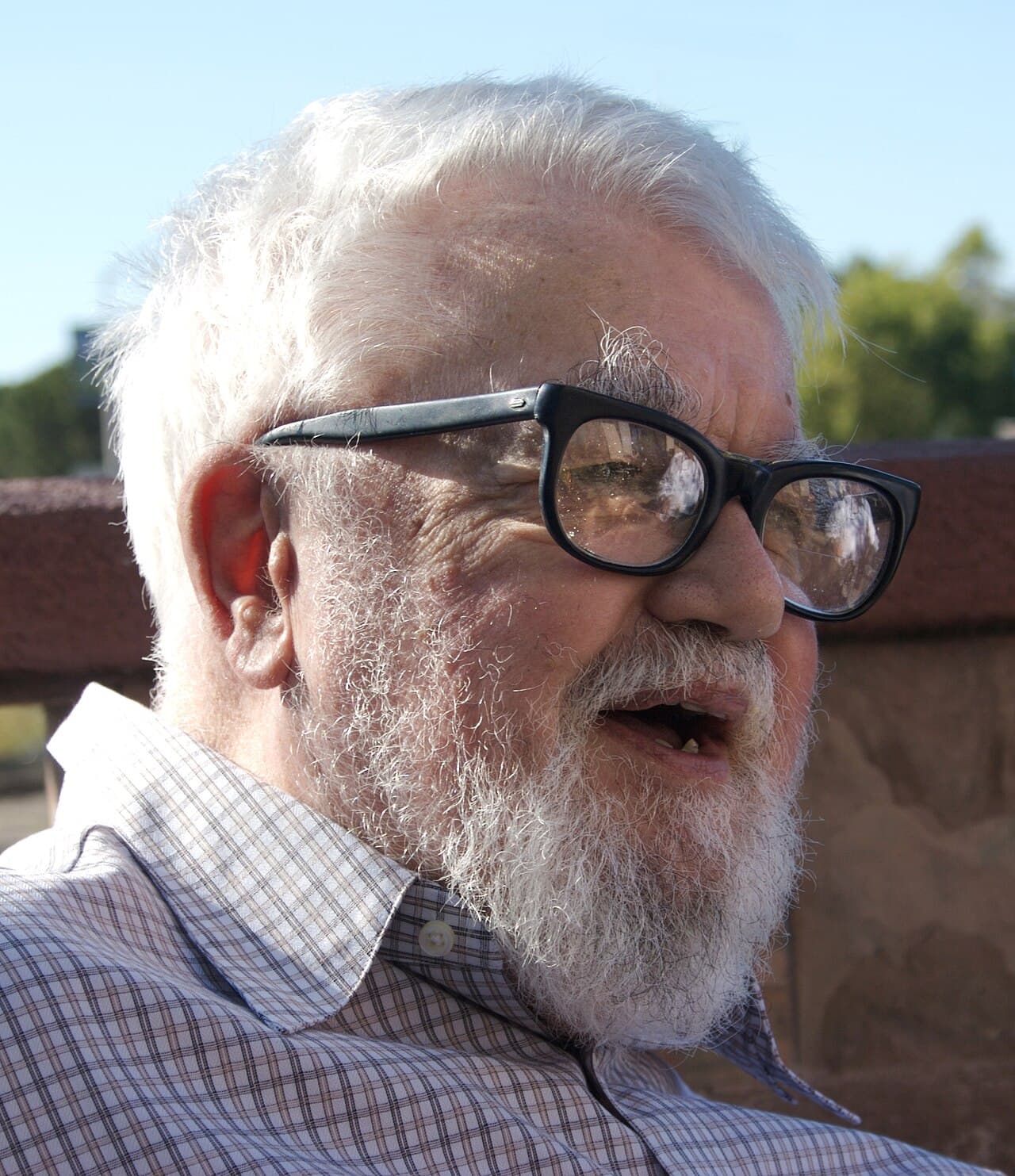
John McCarthy
An AI founding figure who gave the field its name and built tools for expressing symbolic reasoning in software.
Biography
John McCarthy was an American mathematician and computer scientist whose work helped establish artificial intelligence as a field of research. He earned a mathematics degree at the California Institute of Technology and completed his doctorate at Princeton University in 1951. His academic career included Dartmouth, MIT, and Stanford, where he spent most of his later working life.
McCarthy co-authored the 1955 proposal for the Dartmouth summer research project held in 1956. The proposal used the term artificial intelligence and brought together researchers interested in whether aspects of learning and reasoning could be described computationally. The meeting became an important reference point in the formation of the discipline.
He developed Lisp in the late 1950s, giving researchers a programming language suited to manipulating symbols and expressing recursive procedures. His work also addressed logical representations of knowledge, common-sense reasoning, and ways to reason when information is incomplete. At Stanford, he helped establish a laboratory that supported sustained research in these areas.
McCarthy received the 1971 ACM A. M. Turing Award for his contributions to artificial intelligence. He retired from Stanford in 2000 and died in 2011. His legacy includes both research ideas and the programming and institutional foundations that helped other researchers investigate intelligent behavior, long before the current era of large neural models.
Notable contributions
Co-organized the Dartmouth AI project
Co-authored the proposal that named artificial intelligence and led to the landmark Dartmouth research meeting.
Developed Lisp
Created a language for symbolic computation that became widely used in early AI research.
Received the ACM Turing Award
Recognized for foundational contributions to artificial intelligence.