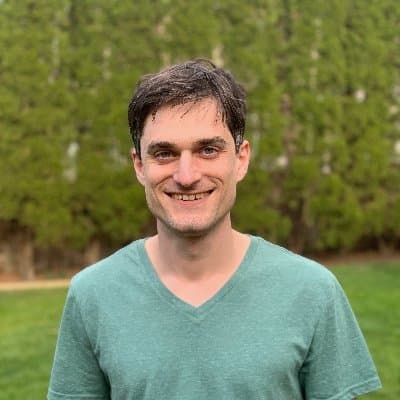
John Schulman
Co-founder and Chief Scientist of Thinking Machines Lab
A policy-optimization researcher whose work connects reinforcement learning, AI alignment, and the training of useful assistants.
Biography
John Schulman is an American AI researcher who helped develop influential methods for training reinforcement-learning systems. He studied physics at the California Institute of Technology and completed his doctorate at the University of California, Berkeley, working with Pieter Abbeel. His graduate research included robotics and methods for learning effective behavior through interaction.
Schulman was a co-founder of OpenAI in 2015. His research on Trust Region Policy Optimization and Proximal Policy Optimization addressed how to improve a learned policy without destabilizing training. These methods became important tools in reinforcement learning, where an agent must discover actions that lead to better outcomes over time.
At OpenAI, Schulman led work related to reinforcement learning and the alignment of language models, including the development of ChatGPT. His contribution formed part of a larger effort involving research, data, and engineering teams. He moved to Anthropic in 2024 to focus more closely on alignment research and hands-on technical work.
In 2025, Schulman became a co-founder and chief scientist of Thinking Machines Lab. His career combines algorithm design with scientific leadership in organizations building advanced models. The recurring problem is how to train capable systems whose behavior improves reliably and can be shaped toward useful objectives, rather than treating raw model capability as the only measure of progress.
Notable contributions
Co-authored Trust Region Policy Optimization
Developed a method for more stable policy improvement in reinforcement learning.
Co-authored Proximal Policy Optimization
Introduced a practical policy-optimization approach widely used in reinforcement-learning training.
Co-founded Thinking Machines Lab
Serves as co-founder and chief scientist, following his earlier work at OpenAI and Anthropic.