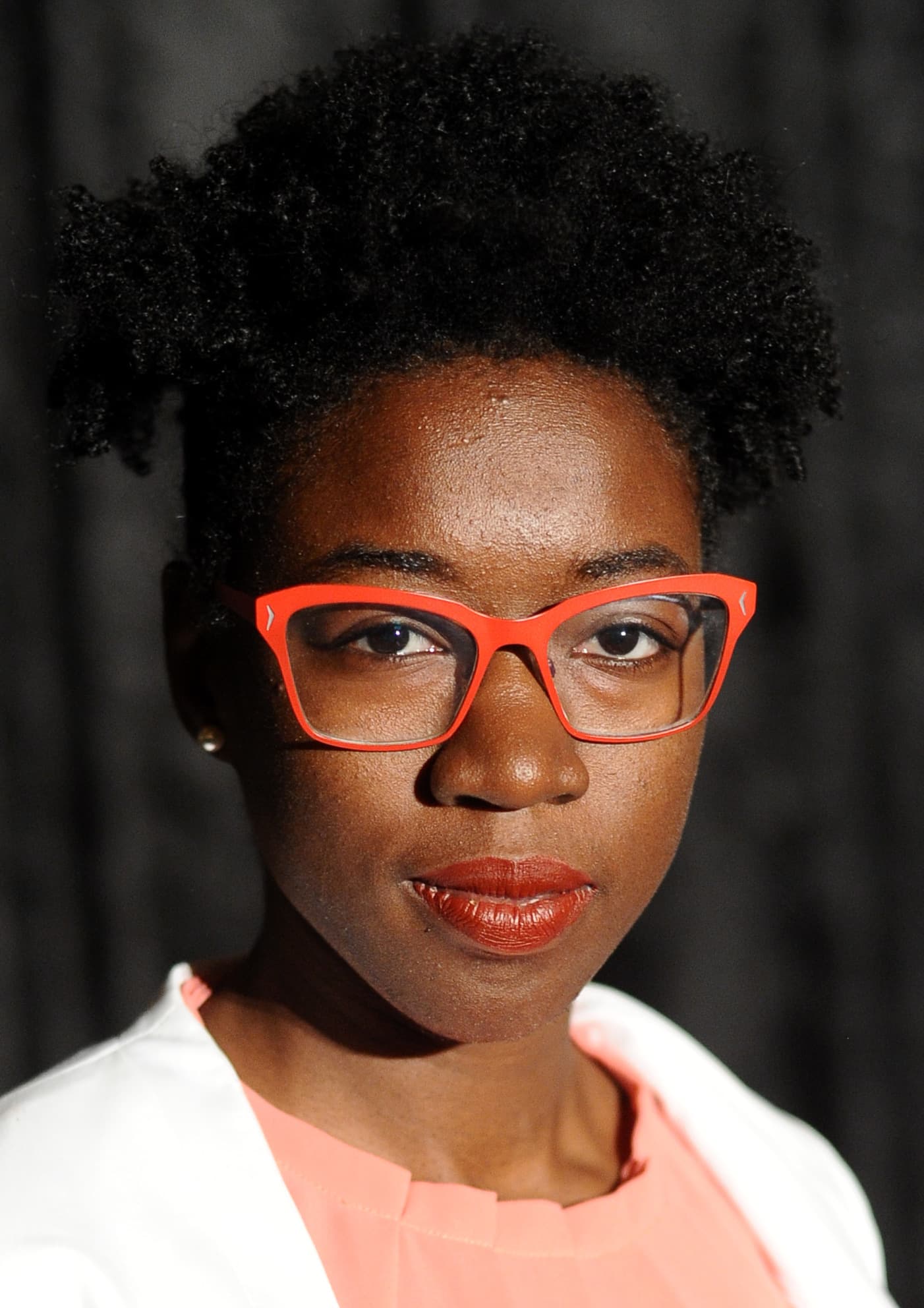
Joy Buolamwini
Founder of the Algorithmic Justice League
The Algorithmic Justice League founder uses research and public advocacy to expose unequal performance and harms in AI systems.
Biography
Joy Buolamwini is a computer scientist, author, and advocate whose work examines bias and discrimination in algorithmic systems. She studied computer science at the Georgia Institute of Technology, pursued graduate study at Oxford as a Rhodes Scholar, and completed graduate degrees at MIT, including a doctorate in 2022. Her research brought technical measurement together with questions about social consequences.
At MIT, Buolamwini investigated facial-analysis systems after encountering failures in their ability to detect her own face. With Timnit Gebru, she published Gender Shades in 2018. The study compared commercial gender-classification systems across skin-type and gender groups, documenting disparities that were hidden by overall performance statistics.
She founded the Algorithmic Justice League in 2016 to combine research, public education, and advocacy concerning AI harms. The organization’s work reaches beyond model accuracy to consider deployment, accountability, and the people affected by automated decisions. Buolamwini’s public engagement helped bring research findings into discussions involving policymakers, companies, and broader audiences.
Her work was featured in the documentary Coded Bias, and she published Unmasking AI in 2023. These projects translate technical and personal experiences into accessible accounts of algorithmic power. Her AI contribution is both empirical and civic: identifying measurable problems in systems and helping the public understand why those problems matter when technologies are used in everyday life.
Notable contributions
Co-authored Gender Shades
Measured demographic performance disparities in commercial gender classifiers with Timnit Gebru, making intersectional evaluation central to the assessment of these systems.
Founded the Algorithmic Justice League
Created the Algorithmic Justice League in 2016 to connect research, advocacy, and public awareness around bias and other harms from AI.
Developed research on algorithmic audits
Completed doctoral research at MIT on approaches to auditing and communicating the effects of AI, connecting technical evaluation with public understanding.