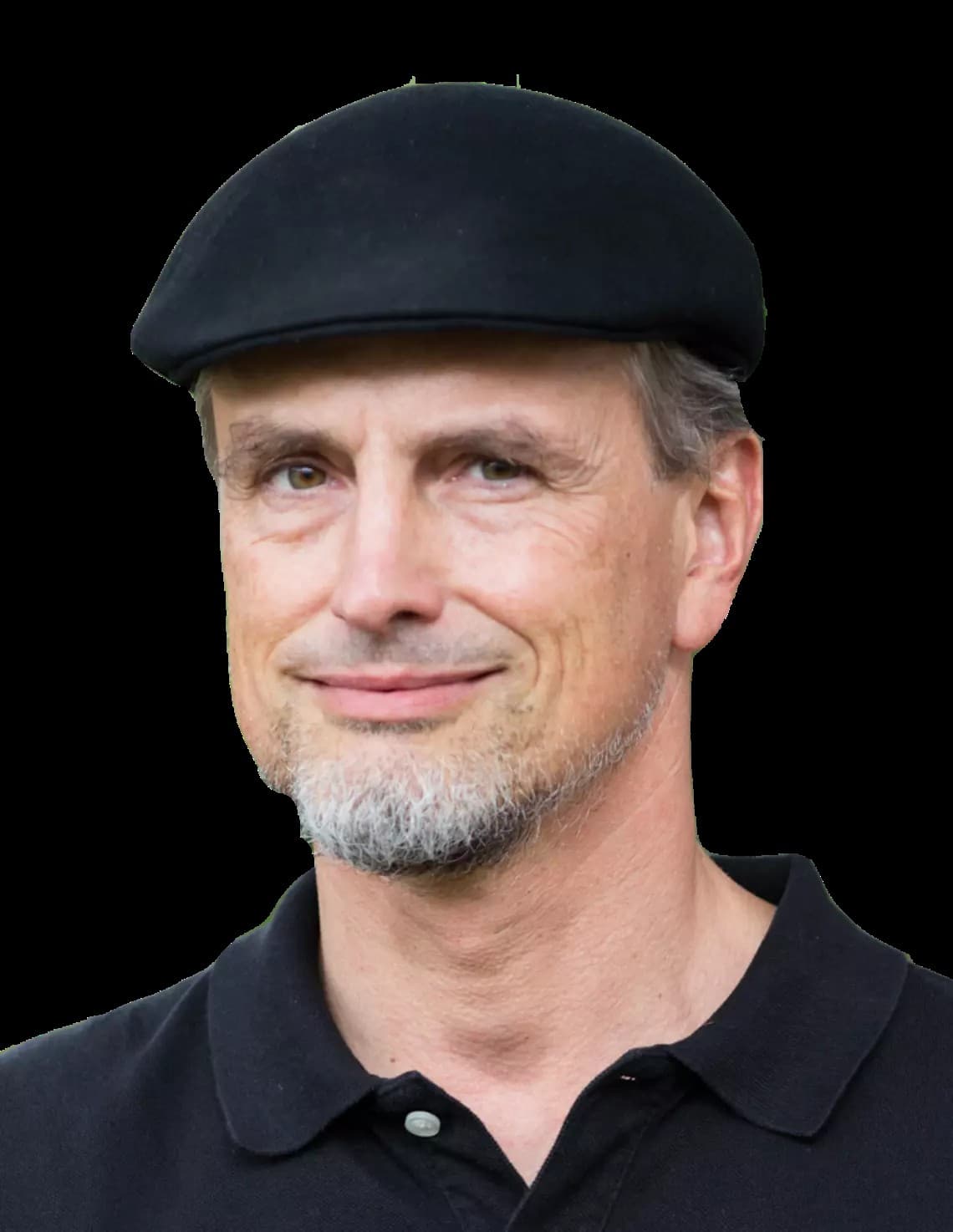
Jürgen Schmidhuber
Professor and Director of the AI Initiative, KAUST
A neural-network researcher whose collaborations include long short-term memory and learned world models.
Biography
Jürgen Schmidhuber is a German computer scientist whose research concerns neural networks, learning agents, and general-purpose artificial intelligence. He earned his doctorate at the Technical University of Munich in 1991. His career has included a long association with IDSIA in Switzerland and leadership of AI research at King Abdullah University of Science and Technology.
With Sepp Hochreiter, Schmidhuber co-authored the 1997 paper introducing long short-term memory, or LSTM. The architecture addressed difficulties in learning relationships across long sequences. LSTM networks subsequently became widely used in applications involving speech, text, and time-dependent data, before attention-based architectures gained prominence in many language systems.
His research has also explored curiosity, learning to learn, and agents that build internal models of their environment. With David Ha, he published World Models in 2018, investigating learned representations and compact controllers. These projects belong to a broader effort to understand how an agent can acquire useful behavior through experience.
At KAUST, Schmidhuber leads an AI initiative and holds a professorial role. He has also participated in AI entrepreneurship through NNAISENSE. His contribution spans technical papers, research supervision, and laboratory development. Assessing that contribution is clearest through specific collaborative results, such as LSTM and world-model research, rather than broad claims of sole priority over the many methods that have shaped modern AI.
Notable contributions
Co-authored long short-term memory
Developed LSTM with Sepp Hochreiter for learning long-range sequence dependencies.
Co-authored World Models
Studied agents using learned representations of their environment with David Ha.
Leads the KAUST AI Initiative
Directs research and institution-building work in artificial intelligence at KAUST.