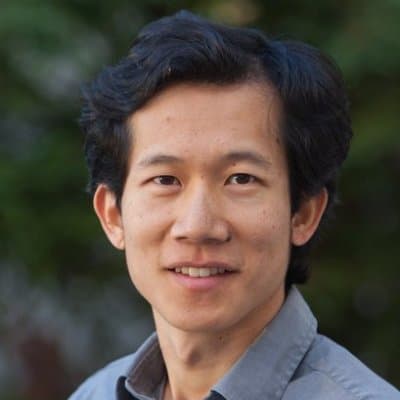
Percy Liang
Professor of Computer Science, Stanford University
A Stanford researcher developing transparent evaluation methods and studying the capabilities and risks of foundation models.
Biography
Percy Liang is a computer scientist at Stanford University whose research concerns machine learning, language, and the evaluation of AI systems. He earned his undergraduate degree at MIT and completed a doctorate at the University of California, Berkeley, in 2011. His academic work has included methods for learning and reasoning from structured information.
At Stanford, Liang became a founding director of the Center for Research on Foundation Models. The center brought researchers from multiple disciplines together to study broadly trained models and their implications. Its work considers technical capabilities alongside questions about reliability, social impact, access, and the conditions under which systems are developed and deployed.
Liang helped lead the development of Holistic Evaluation of Language Models, known as HELM. The project compares models across scenarios and measures, making assumptions and results more explicit. This approach seeks to move assessment beyond a single headline score and toward a clearer account of performance, limitations, and tradeoffs.
He is a professor of computer science at Stanford and continues to work on understanding foundation models. His contribution includes research methods and shared evaluation infrastructure that others can inspect and extend. That work is relevant both to researchers choosing between systems and to institutions trying to determine whether model performance supports a particular real-world use.
Notable contributions
Helped establish Stanford CRFM
Became founding director of a center studying the capabilities and consequences of foundation models.
Co-authored the foundation-models report
Contributed to a multidisciplinary account of opportunities and risks associated with broadly trained models.
Led HELM evaluation research
Developed a framework for comparing language models across multiple scenarios and metrics.