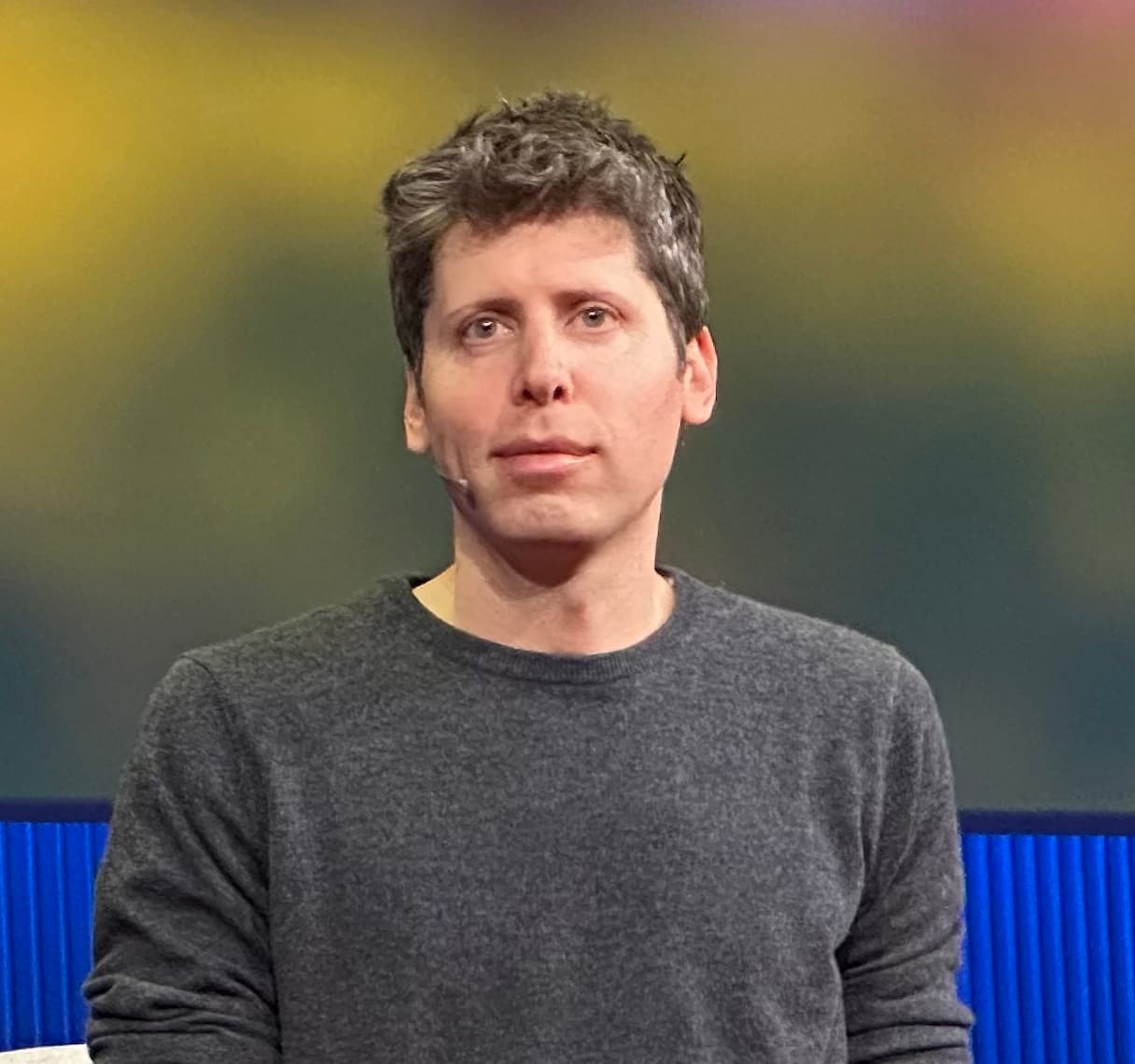
Sam Altman
Co-founder and CEO, OpenAI
OpenAI’s chief executive connects frontier model development with consumer products, developer platforms, and the capital needed to build them.
Biography
Sam Altman’s career spans startup founding, venture investment, and the leadership of an AI research organization. Born in Chicago and raised in the St. Louis area, he attended Stanford University before leaving to build Loopt, a mobile location-sharing company. That experience introduced him to the practical demands of developing a product, attracting investment, and finding a market for a new technology.
Altman subsequently became president of Y Combinator, where he worked with early-stage founders across many industries. His prominence in the startup community preceded his involvement in OpenAI’s creation in 2015. The organization initially presented itself as a research effort focused on ensuring that advanced artificial intelligence would benefit people broadly.
He became OpenAI’s CEO in 2019. During his tenure, the company developed a commercial model API and released ChatGPT in November 2022, bringing conversational generative AI to a much larger public audience. His responsibilities have included organizational strategy, partnerships, fundraising, and the transition from research demonstrations to products used by individuals and businesses.
Altman’s place in AI is principally that of an institutional and commercial leader. The technical advances behind OpenAI’s models belong to large research and engineering teams rather than to a single executive. His influence also extends to public discussions about AI deployment, governance, and the infrastructure required to support increasingly capable systems.
Notable contributions
Co-founded OpenAI
Helped establish OpenAI in 2015 as an organization dedicated to artificial intelligence research. The founding announcement names him among its initial leadership.
Led OpenAI during the ChatGPT launch
Was CEO when OpenAI released ChatGPT in November 2022, helping move conversational language models into a broadly accessible consumer product.
Public AI development principles
Published OpenAI principles discussing how powerful AI should serve people and how the organization approaches its responsibilities when developing and deploying systems.