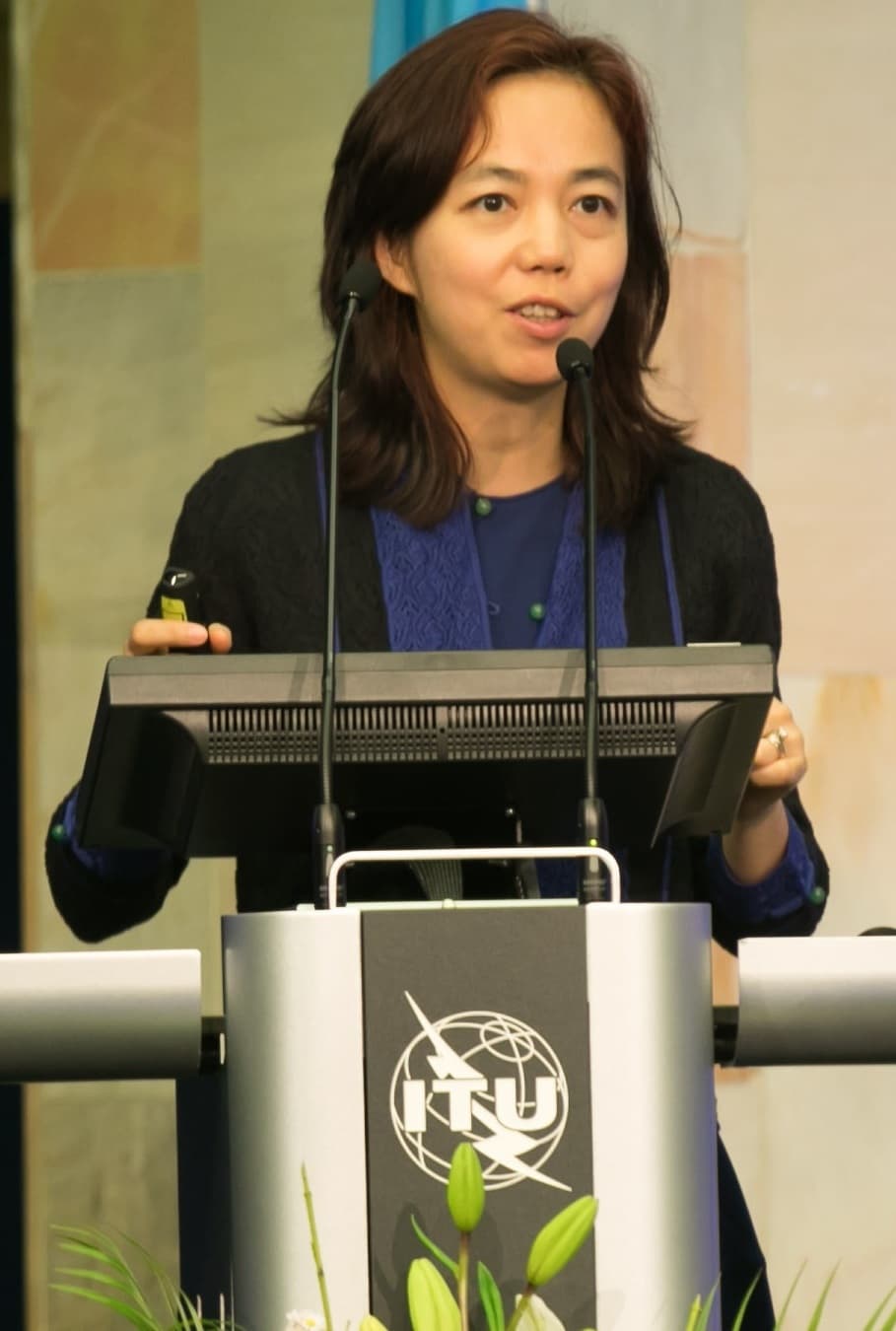
Fernanda Viégas
Gordon McKay Professor of Computer Science at Harvard and Principal Scientist at Google
A Brazilian computer scientist and designer at Harvard and Google who co-founded Google's People + AI Research initiative and works on AI interpretability.
Biography
Fernanda Viégas is a Brazilian computer scientist and graphic designer whose work focuses on social and collaborative data visualization and on human-AI interaction. She is the Gordon McKay Professor of Computer Science at the Harvard John A. Paulson School of Engineering and Applied Sciences, the Sally Starling Seaver Professor at the Harvard Radcliffe Institute, where she was a Radcliffe Fellow in 2023 to 2024, and a principal scientist at Google. She studied graphic design and art history at the University of Kansas, then earned a master's in 2000 and a PhD in Media Arts and Sciences in 2005 at the MIT Media Lab, supervised by Judith Donath, and holds an honorary PhD from Claremont Graduate University.
After MIT she worked at IBM's Thomas J. Watson Research Center, where she helped found the Many Eyes visualization website, and her History Flow work led to some of the earliest studies of Wikipedia editing dynamics, including the repair of vandalism. In 2010 she and Martin Wattenberg started Flowing Media and then joined Google as co-leaders of its Big Picture data visualization group. They co-founded Google's People + AI Research (PAIR) initiative, which works on AI interpretability and on giving lay users more agency and control over AI systems. Her visualization-based artwork with Wattenberg has been exhibited worldwide and is in the permanent collection of the Museum of Modern Art in New York.
Notable contributions
Co-founded Google's People + AI Research initiative
With Martin Wattenberg, co-founded PAIR at Google, which researches AI interpretability and human-AI interaction and builds tools that give people more control over AI systems.
Created History Flow and Many Eyes
Her History Flow visualizations led to some of the earliest scientific studies of Wikipedia editing, and she was one of the founders of IBM's Many Eyes site, which made visualization technology accessible to the public.
Artwork in MoMA's permanent collection
Her visualization-based artwork with Martin Wattenberg has been exhibited worldwide and entered the permanent collection of the Museum of Modern Art in New York.